
Authored by Jason Lauve, aka Mr. Hemp
5 to 12 minute read
 Extensive travels and spending considerable time over the last 7 years visiting numerous communities in Mayan territory throughout Mexico, Guatemala, Honduras, El Salvador, and Belize, has shown me how ancient agricultural practices are maintained, even with the external yet very real negative influence of international corporations. This immersion has been a unique opportunity to learn about the Maya worldview, which is deeply connected to the land and astronomical events, and to understand the importance of language and tradition in shaping individual identity.
The Maya civilization developed one of the most advanced societies in the Western Hemisphere, known for its sophisticated achievements in agriculture, engineering, mathematics, astronomy, and writing systems.
Their deep historical knowledge is rooted in a complex understanding of the natural world and advanced astronomical knowledge celestial cycles. This offers valuable lessons for contemporary challenges, of which would have massive benefits to the USA. Integrating ancestral wisdom with modern science offers a pathway to a more holistic, effective, and accessible healthcare system, sustainable living, and unified environmental practices.
Mayan cultural achievements in astronomy, mathematics, and agriculture, have been inherent to our daily lives, religious beliefs, and social organization. Their math gave us the concept of zero and their sustainable agricultural practices like terracing and crop rotation are now recognized as essential strategies in modern agriculture. We can learn more.
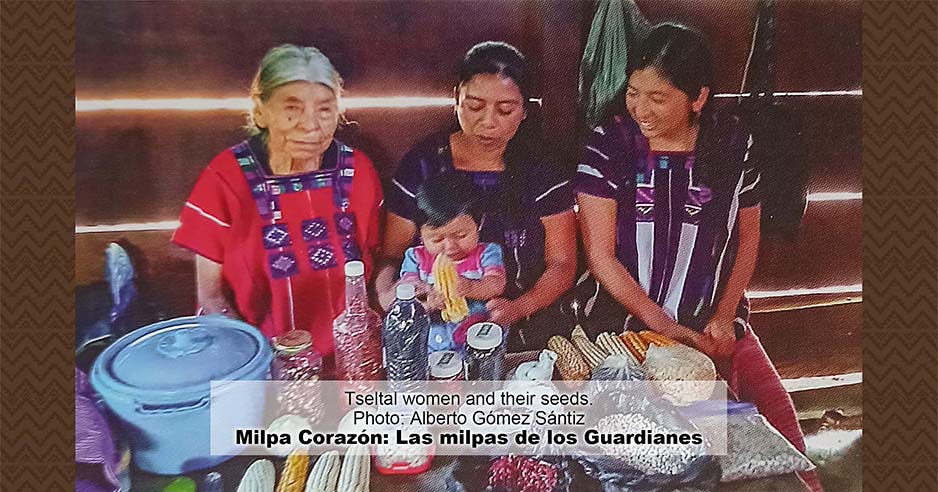
Their polyculture farming is refered to as Milpa, which originates from the Nahuatl words milli (inheritance) and pan (in a package), has enhanced the resilience and productivity of crops while maintaining soil fertility. The crops are nutritionally, medicinally, and environmentally complementary, without using artificial pesticides or artificial fertilizers and can include a dozen crops at once, including maize, avocados, multiple varieties of squash and bean, melon, tomatoes, chilis, sweet potato, jícama, amaranth, and mucuna.
The Milpa is a sociocultural construct rather than simply a system of agriculture, involving complex interactions and relationships between farmers, as well as distinct personal relationships with both the crops and soil.
“the making of milpa is the central, most sacred act, one which binds together the family, the community, creation myths, ancestors, and the universe.”
We used to have a similar relationship with our lands and cultures in the USA and one of those is The Farmers Almanac, which is still used to plan agricultural cycles. Our families and communities used to be centered around each other and not completely separated as we are today in urban and sub-urban environments. While urban environments can foster larger social networks, this often comes at the cost of local cohesion, leading to more impersonal neighborhood ties and a diminished sense of interconnectedness within families, local communities, and our food sources.
As a result many large scale commercial agriculture producers have replaced the connection to local ecosystems with monocultures and intensive use of chemical inputs making food production more vulnerable to pests, diseases, soil degradation, and water contamination. Killing insects with chemicals also harms the wildlife that depends on them for food. A healthy and diverse living soil system can reduce the impact of damage from pests. This is because a thriving soil ecosystem provides natural defenses against pests through various mechanisms, including supporting beneficial organisms and promoting plant health.
The ethical view of nature in Maya culture is rooted in the belief that humans, animals, and the environment are part of a unified system where respect and equilibrium are essential.
In an era marked by government conflict and division in many places around the world, the Mayan philosophy reminds us of the importance of unity and cooperation. Their emphasis on respect for nature and among peoples can serve as a model for resolving disputes and fostering reconciliation.
Mayan culture places a strong emphasis on collective work and community involvement, empowering members through participation in various aspects of life. This includes shared decision-making, collaborative problem-solving, and cooperative resource management. This promotes strong tools of biodiversity and conservation, making it possible for us all to thrive as a large population with fresh water, pollination, soil fertility, food, and medicine, which are critical for thriving human populations. Minimising biodiversity weakens ecosystems, reducing their ability to deliver these vital services.
This sense of belonging and active participation is fundamental for all of our well-being and development. The contribution of the political thought of Mayan women could be a key in building good governance in natural and communal systems, especially in areas related to environmental stewardship and resource management.
 Since the implementation of North American Free Trade Agreement (NAFTA) in 1994, the Maya have suffered for decades with the decimation of their land rights, traditional livelihoods, and cultural identity. Sadly, to this day they are actively working to protect/defend their way of life and maintain environmental stewardship. There has been an aggressive attack on the traditional communal lands of indigenous peoples around the world and our own in the techno world. This has become common for many of us are on the planet.
The NAFTA agreement facilitated the influx of foreign investment and subsidized U.S. agricultural products, especially GMO corn, which devastated small-scale Mexican farmers, including many Maya communities who rely on subsistence farming. This government and corporate power has been diving down prices, devastating heirloom seeds, increasing continuation and engineering a precarious food system risking potential famine. and making it impossible for many Maya farmers to sell their crops at a profit. Any destruction of any heirloom seed bank anywhere in the world represents a significant assault on cultural heritage and global biodiversity.
This change also gave power to outside investors and transnational industrial projects to acquire indigenous territories, where outsiders and large corporations easily acquired land and litterally created economic marginalization for vulnerable people. The resulting economic pressures, environmental contamination in rural areas, harming local populations, polluting rivers, has increased vulnerability for all of us, not just indigenous families, exacerbating existing inequalities in our cities, towns and villages. The resulting economic pressures and environmental contamination are not isolated issues but are interconnected, exacerbating existing social and economic disparities worldwide.
Corporate power over people and the NAFTA eliminated price supports which has allowed cheap, subsidized U.S. GMO corn to flood the Mexican market. This combined with the economic and environmental devastation of the agricultural sector has artifically created massive economic pressure that forced hundreds of thousands of rural Mexicans, including Maya, to abandon their ancestral lands and this has been a major push factor for migration, often to the United States, in search of work. This has been one of the unexpected experiences, learning about how migration to the USA has been influenced over the last 50 years.
The loss of their land is not merely an economic issue, but a profound cultural and spiritual one and a significant source of grievance for Maya communities. The Maya have endured significant historical trauma, including the Guatemalan genocide during the civil war (1960–1996), in which the military, with the assistance of other countries, targeted the Maya population, resulting in the deaths of an estimated 200,000 people and the disappearance of tens of thousands of others.
Women often bear the heaviest burden, experiencing the most severe risks to their physical and mental health, increased caregiving responsibilities, and greater vulnerability to violence and poverty. Even with the attacks and the clear interference of political agendas, the Maya have managed to keep their way of life alive. We all have a responsibility to recognize how this has affected each and every one of us. I can only wonder what their life would be like if their were no infiltration by corporations or forign governments. Without reading current views into their world, we can learn from their integrated approach to life, where the connections between the body, community, food, land, nature, and other animate non-human beings are deeply valued.
Despite historical challenges such as colonization and globalization, Mayan communities have maintained and adapted their traditions, and are holding on to cultural continuity. This offers valuable lessons for all of us in the contemporary world, where change is the only constant.
 Mayan culture is much more than a legacy of the past; it may be a source of wisdom and knowledge that can guide us in seeking solutions to current problems and help us thrive into the future. It is clear that governments do not have any solutions that actually support the health and well being of humans.
In a moment when the planet faces unprecedented challenges, embracing the teachings of ancestral cultures like the Maya is not merely an act of recognition, but a necessity for achieving a thriving and equitable future worldwide. We must be the students again.
READ MORE…